
|
2011
|
This manual provides “step-by-step guidance in the planning process … [that] will help ensure the efficient continuation of operations during an emergency, the reduction of risk to the physical plant, and, most importantly, the safety and well-being ... Read More
|
|
|
2011
|
These proceedings are about Excited Delirium Syndrome (ExDS) and strategies for addressing it. Law enforcement and medical professionals should be aware of ExDS and the ways it could impact their interactions with afflicted individuals. “The purpose ... Read More
|
|
|
2010
|
Excited delirium or agitated delirium involves and individual acting in a particularly “violent, erratic, or bizarre manner”. Physical signs include: unfounded fear and panic; shouting and/ or nonsensical speech; hallucinations, paranoia, or other st... Read More
|
|
|
2010
|
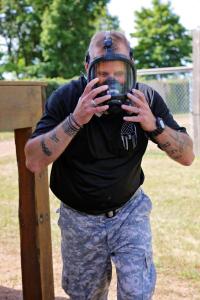
“This document is a voluntary performance standard for chemical, biological, radiological and nuclear (CBRN) protective ensembles for use by law enforcement. It defines both performance requirements and the methods used to test performance" (p. vii).... Read More
|
|
|
2009
|
"This report identifies the considerations that law enforcement executives should address in their public health communications plans, regarding internal communications (those that remain with the law enforcement agency) as well as external communica... Read More
|
|
|
2009
|
The goal of this document "is to increase awareness and provide guidance to community corrections for developing preparedness and response plans for pandemic flu and other crises" (p. iii). Five sections follow an introduction: pandemic planning and... Read More
|
|
|
2009
|
This “report is an interactive guide that leads the reader through a planning process to ensure continuity of law enforcement operations during a flu pandemic” (p. iii). This document is divided into seven sections: identify the department planning t... Read More
|
|
|
2009
|
Ways to address widespread infection in correctional facilities are covered. Topics discussed include: increased use of personal and environmental cleaning; ranking infection risk from DEFCON 1 to 4; and focusing on disinfecting floors.... Read More
|
|
|
2009
|
This guide “will be broadly useful to U.S. jails in planning for crises, emergencies, and natural disasters and in developing the appropriate response capacities to cope with these events where they cannot be prevented” (p. vi). Six sections are cont... Read More
|
|
|
2009
|
Standard Operating Procedures and related forms are provided for the four modules making up the U.S. Bureau of Prisons' (BOP) Pandemic Influenza Plan, which addresses health services. The modules are: surveillance and infection control; antiviral me... Read More
|
|
|
2009
|
This 3-hour program, originally broadcast December 9, 2009, and hosted by the National Institute of Corrections, will address the issue of correctional facility operations and H1N1 (swine flu). The Centers for Disease Control and Prevention and crimi... Read More
|
|
|
2009
|
“This report identifies the considerations that law enforcement executives should address in their public health communications plans, regarding internal communications (those that remain within the law enforcement agency) as well as external communi... Read More
|
|
|
2008
|
Information is provided at this website by the Center for the Study of Traumatic Stress (CSTS). Points of entry are: about the center; trauma and disaster -- world trauma, disaster, armed conflict and war, terror, and preparedness; about you -- you,... Read More
|
|
|
2008
|
The National Emergency Communications Plan (NECP) which "focuses on the emergency communications needs of response personnel in every discipline, at every level of government, and for the private-sector and non-governmental organizations," is present... Read More
|
|
|
2008
|
Specific action steps are described "that have particular potential to address existing barriers and misconceptions . . . and make cross-sectoral and cross-jurisdictional collaboration more feasible, productive, and common -- without duplicating the ... Read More
|
|
|
2008
|
This National Response Framework (NRF) [or Framework] is a guide to how the National conducts all-hazards response . . . [and] is built upon scalable, flexible, and adaptable coordinating structures to align key roles and responsibilities across the ... Read More
|
|
|
2006
|
Contents of these proceedings are: meeting highlights; Report from the Bureau of Justice Statistics by Allen Beck; Discussion: PREA in Local Jails; Statistical Analysis: Crowding, Life Safety, and Managing Staff by Patrick Jablonski and Scott Bradste... Read More
|
|
|
2006
|
Contents of these proceedings are: meeting highlights; "Open Forum: Hot Topics for Discussion"; "Understanding Culture: The Root of It All" by Carol Flaherty-Zonis; "NIC Information Center Briefing" by Sandy Schilling and Josh Stengel; "Analyzing ... Read More
|
|
|
2005
|
This self-paced course, available online or on CD-ROM, provides training on leadership during critical incidents. Topics discussed include: applying transactional leadership to emergency preparedness issues; the shift from transactional to transform... Read More
|
|
|
2005
|
Information regarding prison emergency preparedness is presented. This guide is comprised of the following sections: introduction; conducting an audit; self-audit checklists--emergency preparedness, natural disaster/HAZMAT/fire, and counterterrorism;... Read More
|
|
|
2004
|
Contents of these proceedings include: meeting highlights; Domestic Preparedness and the Impact on Large Jails by Sue Menser; meeting participants discussion of issues; Role of the Jail in Public Health Policy by Don Leach; MRSA (Methicillin-Resistan... Read More
|
|
|
2002
|
This 3-hour videoconference explains emergency preparedness action planning from a systemic perspective conducive to natural community partnerships. The following topics are discussed:
- The nature of corrections-related emergencies;
- Par... Read More
|
|
|
2002
|
Contents of these proceedings include: meeting highlights; "Cost Containment for Inmate Health Care" by Rebecca Craig; "Taming the Cost of Health Care in Detentions: What Works in San Diego County" by William Sparrow; "Confronting Costs for Medical C... Read More
|
|
|
2001
|
Supplemental resources for the training program "Emergency Preparedness Assessment" (NIC accession no. 006995) are presented. Contents directly related to emergency plans include: Interim Commander checklist; Incident Commander checklist; Prison Ope... Read More
|
|
|
1999
|
The issues of post-traumatic stress and critical incidents are addressed. Contents of this document include: meeting highlights; post-traumatic stress syndrome and critical incidents -- preparation, response, and review; post-traumatic stress -- the... Read More
|
|
|
1995
|
These security tips checklists were compiled from prison security training seminars conducted through the National Institute of Corrections. Topics addressed include: security audits, facility planning, technology, post analysis, staff recruitment, ... Read More
|
|