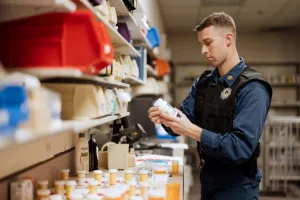
Explore the National Institute of Corrections (NIC) Clinical Pearls webinar series, focusing on healthcare and pharmacy best practices in carceral settings.
Content Associated with this Tag
- This webinar is part of the National Institute of Corrections Clinical Pearls series. The series explores how to integrate clinical pharmacists into primary care. Session participants will learn how to identify best practices for carceral team medicine and clinical pearls in disease states affecting adults in custody.
ID: 033110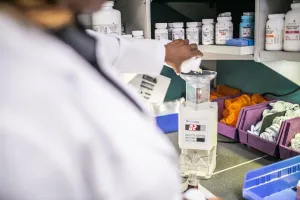
- Learn from Commander Chawntel Hunt, a Board-Certified Geriatric Pharmacy Specialist, and Lieutenant Commander Kiara Stoner, Chief Pharmacist of the Federal Medical Center Fort Worth, about the ways the Federal Bureau of Prisons evaluates the challenges of aging in custody.
ID: 033108
- Compared to the general population, the prevalence of HIV infection is significantly higher within the correctional environment due to a variety of factors. CDR Drew Swigart and LCDR Marinda Thomas-LePage are board-certified clinical pharmacists who both hold AAHIVP credentialing and specialize in the management of HIV infection within the incarcerated population of the Federal Bureau of Prisons (BOP). During this presentation they will discuss strategies and best-practices employed by the BOP for HIV screening and treatment that consistently results in 90% of patients achieving treatment goals for viral control.
ID: 033106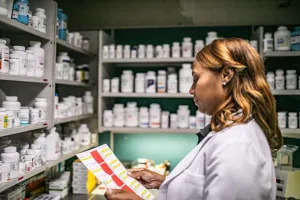
- Commander Beth Thompson, National Lead for the Federal Bureau of Prisons HIV Pharmacy Consultants, and Lieutenant Commander Alyson Dunlavey, a Transitional Care Pharmacist, illustrate the significance of harm reduction in the correctional setting. Join these clinical pharmacists as they identify strategies to implement harm reduction programs that combat substance use and infectious disease syndemics in the correctional setting and promote successful reintegration of incarcerated adults into society.
ID: 033105
- Commander Tyler Campbell, National Lead for the Federal Bureau of Prisons Antimicrobial Stewardship Pharmacy Consultants, and Commander Jessica Murrer, a Central Pharmacy Services Pharmacist, introduce fundamental principles of antimicrobial stewardship in the correctional setting. Join these outstanding clinical pharmacists as they outline targeted antimicrobial interventions that improve patient outcomes, potentially reduce costs, and ultimately protect our antimicrobial arsenal from the development of resistance.
ID: 033104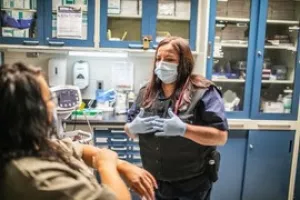
- While hepatitis C is a source of morbidity and mortality all over the world, its effects can be seen disproportionately in the correctional setting. Join Commander Katrina Klang, National Lead for the Federal Bureau of Prisons Hepatitis Pharmacy Consultants, and Lieutenant Commander Alex Brorby, Chief Pharmacist at Federal Correctional Complex, Florence, as they illustrate best practices for identifying, treating, and ultimately eliminating hepatitis C. The practices they share can be adapted to suit any correctional healthcare setting.
ID: 033103
- The Federal Bureau of Prisons employs a robust clinical pharmacy program to support patient-centered care in both comprehensive care and specialized disease states. Captain Tami Rodriguez, Director of Pharmacy Programs, and Commander Josh Valgardson, Chief of Clinical Pharmacy, introduce the critical roles played by clinical pharmacists in providing outstanding primary care for incarcerated adults in the Federal Bureau of Prisons. Pharmacists serve in direct patient care roles, as well as centralized consultancy services. Learn more about leveraging pharmacists’ special skills for improved health outcomes.
ID: 033102