
Webinar Summary:
The Federal Bureau of Prisons employs a robust clinical pharmacy program to support patient-centered care in both comprehensive care and specialized disease states.


Official websites use .gov
A .gov website belongs to an official government organization in the United States.

Secure .gov websites use HTTPS
A lock (
) or https:// means you’ve safely connected to the .gov website. Share sensitive information only on official, secure websites.

Due to the lapse in appropriations, the National Institute of Corrections website may not be up to date. Help desk and technical assistance submitted via the website may not be processed or responded to until appropriations are enacted. Please visit https://nicic.gov/resources/nic-library to access our online resources.
The Federal Bureau of Prisons employs a robust clinical pharmacy program to support patient-centered care in both comprehensive care and specialized disease states.

While hepatitis C is a source of morbidity and mortality all over the world, its effects can be seen disproportionately in the correctional setting.
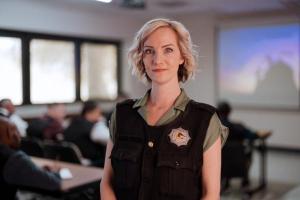

Compared to the general population, the prevalence of HIV infection is significantly higher within the correctional environment due to a variety of factors.

Opioid use has reached epidemic proportions in the United States, and the prevalence of opioid use disorder (OUD) is disproportionally represented in incarcerated adults.

Learn from Commander Chawntel Hunt, a Board-Certified Geriatric Pharmacy Specialist, and Lieutenant Commander Kiara Stoner, Chief Pharmacist of the Federal Medical Center Fort Worth, about the ways the Federal Bureau of Prisons evaluates the ch

Both CDR Natalie Li and LT Colby Kern, Advanced Practice Diabetes Pharmacists have robust comprehensive diabetes clinical care practices. They independently follow the most complicated diabetes patients at their institutions.
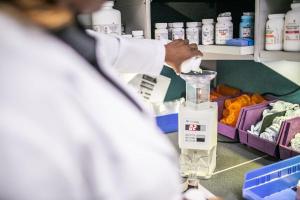
This webinar is part of the National Institute of Corrections Clinical Pearls series. The series explores how to integrate clinical pharmacists into primary care.
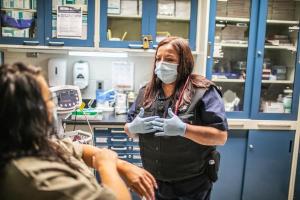
Commander Tyler Campbell, National Lead for the Federal Bureau of Prisons Antimicrobial Stewardship Pharmacy Consultants, and Commander Jessica Murrer, a Central Pharmacy Services Pharmacist, introduce fundamental principles of antimicrobial stewardship in the correctional setting.