



The process of re-entering society after a period of incarceration, focusing on successful reintegration, reducing recidivism, and improving public safety.
Content Associated with this Tag
Supporting Transition to Civilian Life Across the Sequential Intercept Model
They were veterans before they were incarcerated individuals. That is the sentiment and approach to veterans reentry of Sharon Kirkpatrick, member of the Washington Women Veterans Advisory Committee. Upon meeting with a veteran for the first time, she begins by acknowledging their military service, both because she honors their sacrifice and because the veterans need to hear and embrace these words for themselves. Helping veterans understand that they are more than their criminal charge is the first step to helping them see beyond their current circumstances and guiding them along the path of reentry.
ID: 033668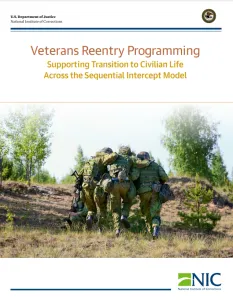
On December 11, 2018, American Enterprise Institute Resident Fellow Brent Orrell and Minnesota Department of Corrections Director of Research Grant Duwe hosted a private working-group meeting on evaluating and developing reentry programs for individuals returning to their communities from prison.
National Institute of Justice - Youtube Video (2:29 minutes)
Individuals returning to the community from jail often face difficulties accessing the varied health, social, and other services required to improve reentry and reduce recidivism.
National Institute of Justice - Video (1:50 minutes)
Speakers: John Wetzel, Secretary of Corrections, Pennsylvania Department of Corrections , Grant Duwe, Ph.D., Director of Research and Evaluation, Minnesota Department of Correction
For jurisdictions implementing behavioral health-criminal justice programs to help minimize justice involvement among people with mental illnesses and substance use disorders, the ongoing costs can present challenges to long-term operation.
Two recent reports have been produced from experts in NCJR.
The Consumer Financial Protection Bureau (CFPB) is a U.S.
- This comprehensive hub serves as a repository of resources focused on exploring a range of issues associated with recidivism, including effective practices that significantly reduce recidivism rates, detailed statistical research, and evidence-based programming within correctional facilities.

- Now, more than ever, as communities work to reduce correctional populations to respond to the COVID-19 pandemic, it can be easy for jails and prisons to miss steps that ensure safety of employees and the people who are returning to their communities. Use this legal-sized checklist, now updated with information about vaccinations and the latest guidance from the Centers for Disease Control and Prevention, as a guide for reentry planning during this critical time.
- April is Second Chance Month, a time to highlight the importance of supporting safe and successful reentry for those returning home from incarceration each year. Each April, offices across OJP celebrate Second Chance Month with various activities to draw attention to these important programs and policies. The BJA- and OJJDP- supported National Reentry Resource Center is the nation’s primary source of information and guidance on reentry. Through its vast collection of tools and training opportunities, the Center supports implementing evidence-based reentry programs.
- Social Security Disability Insurance (SSDI) and Supplemental Security Income (SSI) payments generally are not payable for months during which you’re imprisoned for committing a crime. Conditions will apply for incarcerated people who want to reinstate their payments.